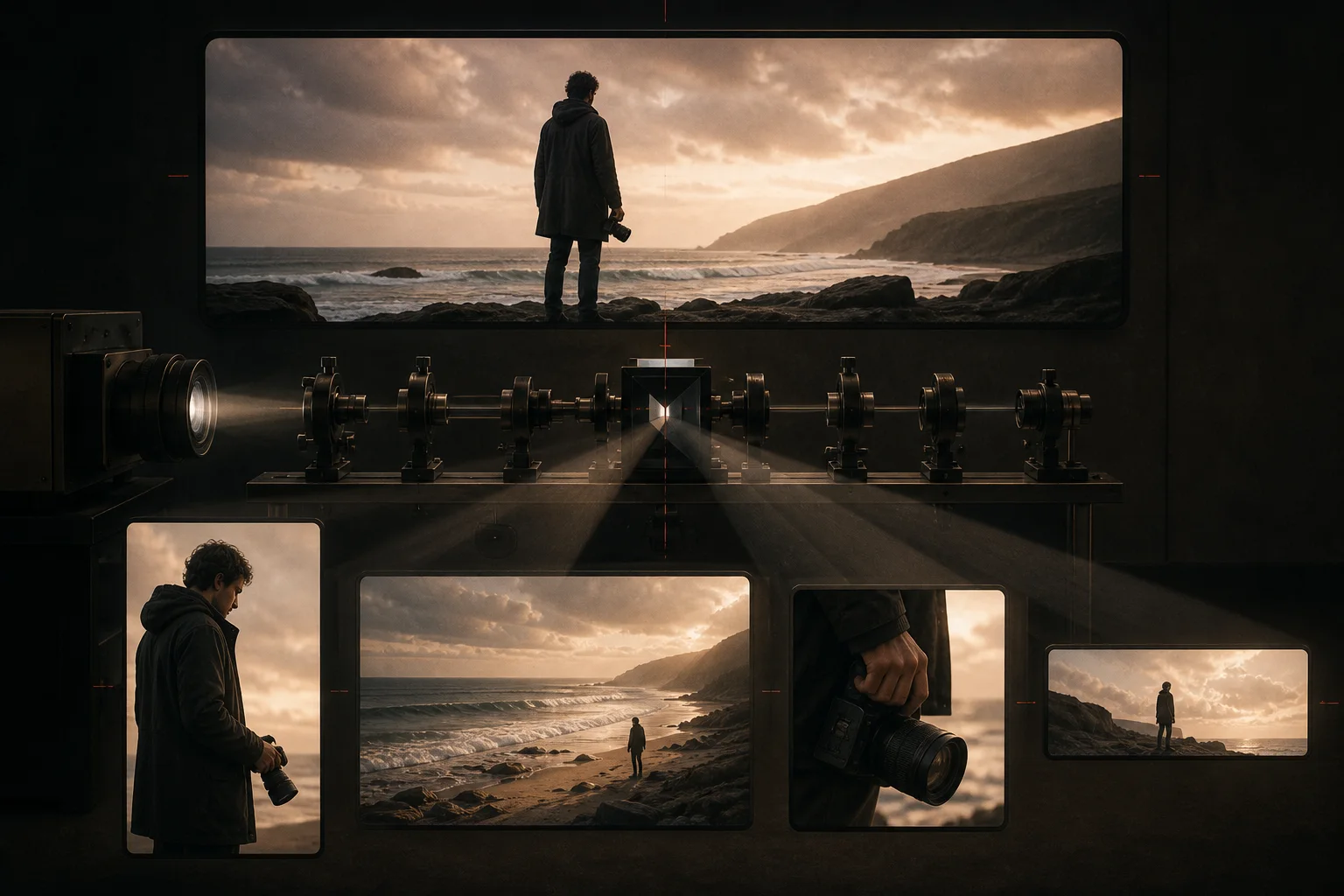
Keep the core message and proof, then redesign the opening, duration, crop, captions, audio, and call to action for each channel.
Separate the idea from the original edit
Write the core claim, proof, emotional mechanism, and intended action in plain language. Those elements should survive adaptation even when the shots, timing, and narration change.
Treat the original video as source material, not a sacred timeline.
Rebuild the opening for the context
A viewer arriving from search, a paid social feed, a product page, and an existing subscriber relationship starts with different knowledge and intent.
Change the hook so the first seconds establish the most relevant tension, outcome, or proof for that context. Do not add a louder opening that disconnects from the rest of the story.
Recompose instead of merely cropping
Check whether faces, products, demonstrations, text, and movement remain readable in the new aspect ratio. Reframe or rebuild shots when the composition no longer carries the same information.
Design graphics and captions for the actual safe area of each platform. Avoid shrinking a horizontal layout until nothing is legible.
Adapt pacing and sound
Short versions need fewer beats, not simply faster playback. Remove secondary arguments and preserve the shortest credible path from hook to proof to payoff.
Rebuild music, sound effects, voiceover, and silence around the new cut. Confirm that the opening still works when playback begins muted, then make sound worth enabling.
Change the call to action
Match the action to where the viewer is. A discovery clip may invite the next story. A product page video may support a purchase decision. An ad may need one explicit offer.
Do not carry a platform-specific call to action into every version.
Track each adaptation
Assign a clear identifier to every version and record audience, channel, hook, crop, duration, and call to action. Connect performance back to the creative decision that changed.
This turns repurposing into a learning system instead of a file-export exercise.
Questions creators ask
What should stay consistent when repurposing a video?
Keep the core claim, proof, brand truth, and recognizable creative idea. Adapt the opening, pacing, duration, crop, captions, audio, and call to action.
Can a horizontal video simply be cropped for vertical platforms?
Only when the important action survives the crop. Otherwise rebuild framing, graphics, or shot order for the vertical composition.
How many versions should be produced?
Produce only the versions tied to a real distribution context, audience, or test. Avoid creating files with no publishing plan.
Built from production practice, primary product documentation, and repeatable workflow checks. Read our editorial standards.