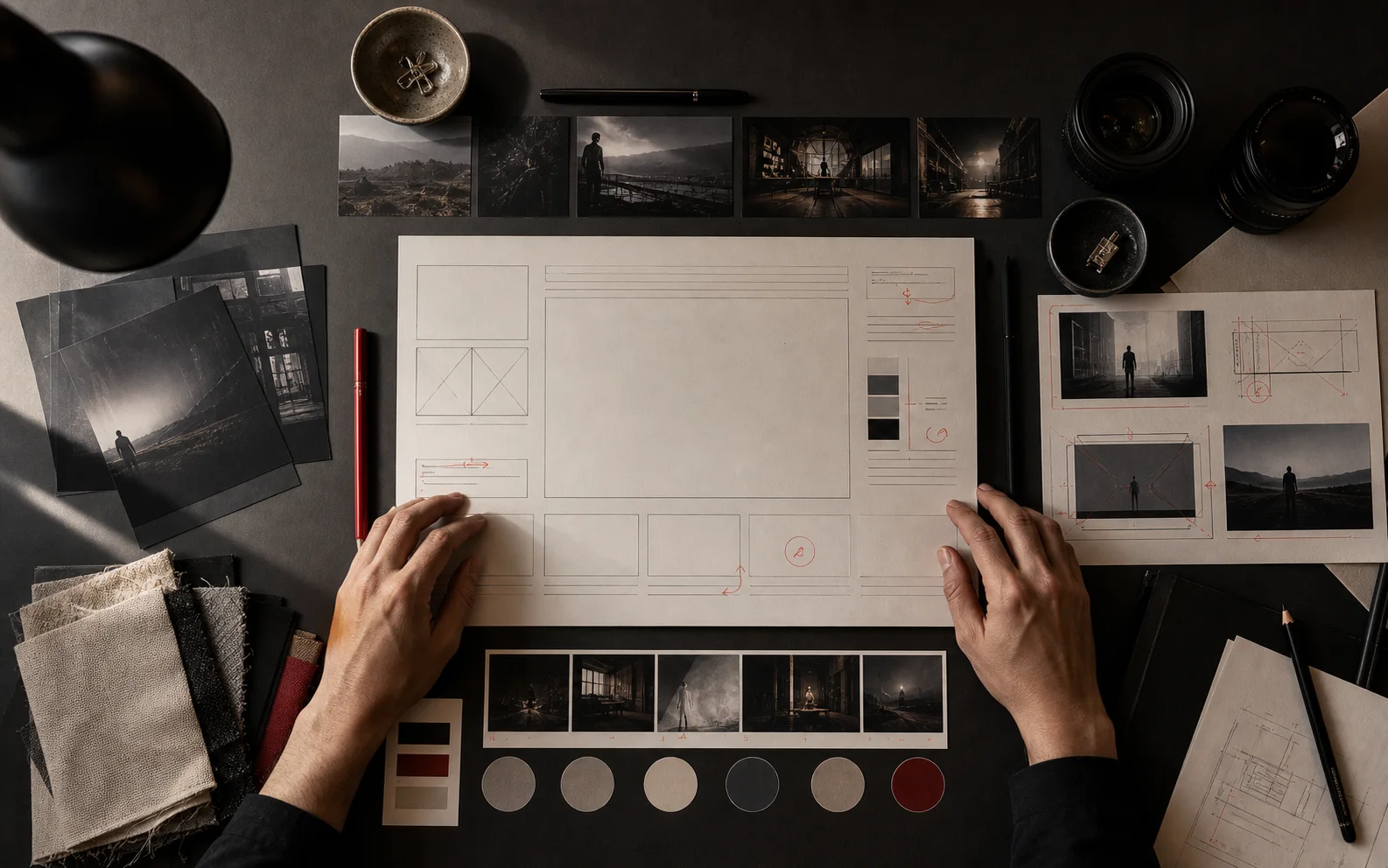
Define the audience, intended change, story beats, references, delivery constraints, and acceptance criteria in one production document.
Start with the change you want
Write what should be different after someone watches the video. They may need to understand a product, remember a claim, feel a tension, trust a demonstration, or take an action. This sentence is the production objective.
Name the audience and viewing situation as precisely as the project allows. A product film shown on a landing page has a different job from the same footage used as a six-second paid-social hook.
Lock one message
Write the one idea the viewer should retain. Supporting ideas can appear, but they should not compete with the primary message.
Turn the message into a small sequence of beats. Each beat should change information, emotion, or action. If two beats do the same job, combine them before anyone writes a prompt.
Separate references by purpose
Do not place every image in one mood board. Label each reference by what it controls:
- Character or product identity
- Environment and production design
- Lighting and color
- Camera or motion behavior
- Editing rhythm
- Voice, music, or sound
This prevents a model or operator from copying the wrong quality from an attractive reference.
Record production constraints
State duration, aspect ratio, required variants, language, captions, product accuracy, recurring characters, dialogue, and delivery date. Add any brand elements that must remain exact.
Convert these constraints into a shot list before choosing models. The hardest requirement in each shot should drive routing.
Define what approval means
Write acceptance criteria before the first generation. For a product shot, these might include correct geometry, readable packaging, a stable logo, controlled camera movement, and a clean edit point.
Approval criteria stop subjective iteration from expanding forever. They also make it clear when to revise the prompt, change the reference, redesign the shot, or switch models.
Keep the brief alive
Update the brief when the story, constraint, or approved direction changes. Do not let decisions live only in chat threads or generation histories.
The final brief should remain attached to the project so editors, sound designers, reviewers, and publishing teams work from the same intent.
Questions creators ask
What belongs in an AI video brief?
Include the audience, intended viewer response, core message, story beats, references, delivery format, non-negotiables, and approval criteria.
How long should the brief be?
It should be short enough to scan during production but specific enough to resolve disagreements before generation begins. One or two structured pages is usually enough.
Should the brief name an AI model?
Only when a model capability is itself a requirement. Otherwise define the shot constraints first and choose the model afterward.
Built from production practice, primary product documentation, and repeatable workflow checks. Read our editorial standards.