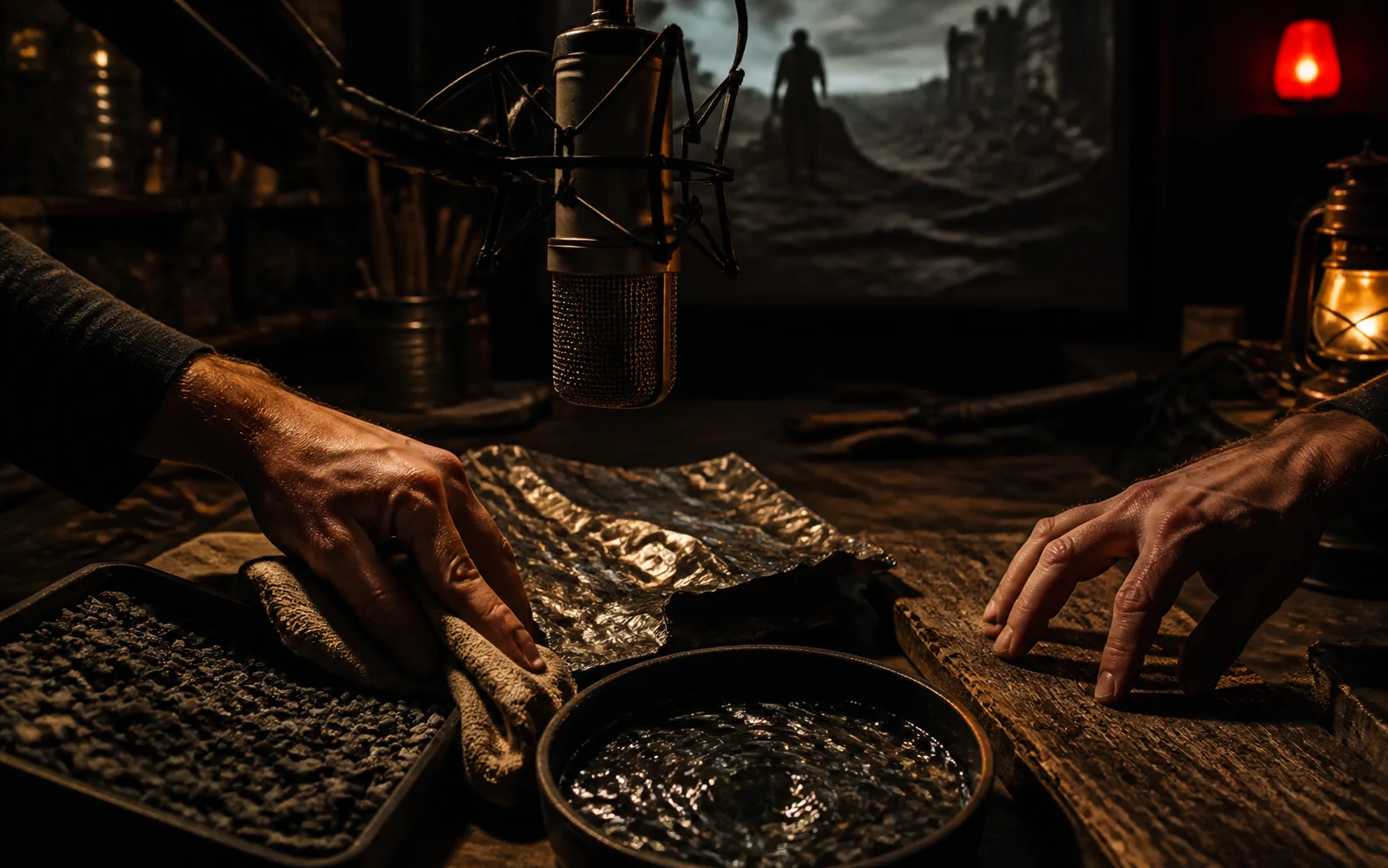
Plan dialogue, ambience, effects, music, and silence alongside the storyboard, then mix them around story priority rather than filling every second.
Make an audio plan with the storyboard
Write what the viewer should hear during each beat. Include dialogue, voiceover, room tone, environmental ambience, specific effects, transitions, music, and silence.
Audio decisions change shot timing. A line needs space to land. A reveal may need a breath before the impact. A sound bridge may allow a visual cut to happen earlier.
Protect dialogue and voice
Choose the performance before polishing the mix. Direction should cover pace, emphasis, breath, emotional restraint, pronunciation, and distance from the listener.
Remove competing frequencies and unnecessary effects around speech. The most cinematic mix still fails when the audience cannot understand the line.
Build a believable environment
Start with room tone or a continuous environmental bed. Add a small number of specific sounds that locate the scene: a ventilation hum, traffic through glass, fabric movement, a distant announcement, or machinery changing speed.
Avoid stacking generic effects at equal volume. Sound perspective should match the camera and the implied distance of each source.
Use effects to clarify action
Give important actions a readable sonic consequence. A hand gripping metal, a product locking into place, or a light bank turning off may need sound even when the generated footage does not provide it.
Effects should support weight, material, scale, and timing. They should not simply make the scene louder.
Let music shape the edit
Choose music for structure, not mood words alone. Mark downbeats, changes in density, breaks, and phrases that can carry cuts or reveals.
Edit around musical form when the piece is music-led. For dialogue-led work, let music move away from the voice and return between lines.
Use silence deliberately
Silence can isolate a line, make a visual change feel larger, or create anticipation before a payoff. A constant wall of sound removes contrast.
Plan the moments where sound drops out instead of treating silence as missing production.
Check the delivery context
Review the mix on studio headphones, ordinary earbuds, a phone speaker, and the platform where the video will appear. Confirm dialogue, bass, peaks, mono compatibility, and caption timing.
Export clean dialogue, music, and effects stems when future versions or language adaptations are likely.
Questions creators ask
What sound layers does an AI video need?
Most projects use some combination of dialogue or voice, room tone, environmental ambience, specific effects, transitions, music, and intentional silence.
Should sound be planned before generating video?
Yes. Dialogue timing, musical beats, sound-led transitions, and key effects can change shot duration and camera direction.
How loud should music be under dialogue?
Set dialogue intelligibility first, then place music around it. Check the final mix on headphones, phone speakers, and the delivery platform.
Built from production practice, primary product documentation, and repeatable workflow checks. Read our editorial standards.